

In the heart of every busy market in Accra, Kumasi, or Takoradi, you will find a similar scene: a shop owner leaning over a wooden counter, scribbling figures into a well-worn notebook. This “sales book” has been the backbone of Ghanaian retail for decades. It is simple, it doesn’t require electricity, and it feels like a personal record of a hard day’s work.
However, as we move through 2026, many business owners are realizing that the notebook is no longer enough. You might find yourself at the end of a long Saturday staring at a page of messy handwriting, trying to figure out why your cash drawer is GHS 200 short. Or perhaps you’ve noticed that your “Best Seller” is suddenly out of stock because you didn’t see the numbers dwindling until the shelf was empty.
This is the classic struggle between manual sales tracking and POS software. To grow a sustainable business in today’s economy, you need to understand which of these methods actually protects your profit and which one might be quietly holding you back.
The True Cost of “Free” Manual Sales Tracking
Manual sales tracking—using pens, paper, or simple calculators—is often chosen because it feels free. There is no software subscription to pay and no hardware to buy. But for a growing shop, manual tracking has hidden costs that can be devastating.
The most significant issue is human error. In a fast-paced retail environment, it is easy to forget to record a sale during a rush or to write down the wrong price. When you are tired after a 12-hour shift, adding up columns of numbers manually often leads to mistakes. These small errors might seem minor, but over a month, they can hide significant losses.
Beyond simple math errors, manual systems lack accountability. If you are not physically in the shop, a manual notebook makes it very easy for “shrinkage”—a polite term for employee theft—to occur. Without a digital timestamp and a system that links sales directly to inventory, you have no way of knowing if every item that left the shelf was actually paid for. In Ghana, where many SMEs operate on thin margins, even a 5% loss in stock can mean the difference between profit and closure.
Transitioning to POS Software: Efficiency and Control
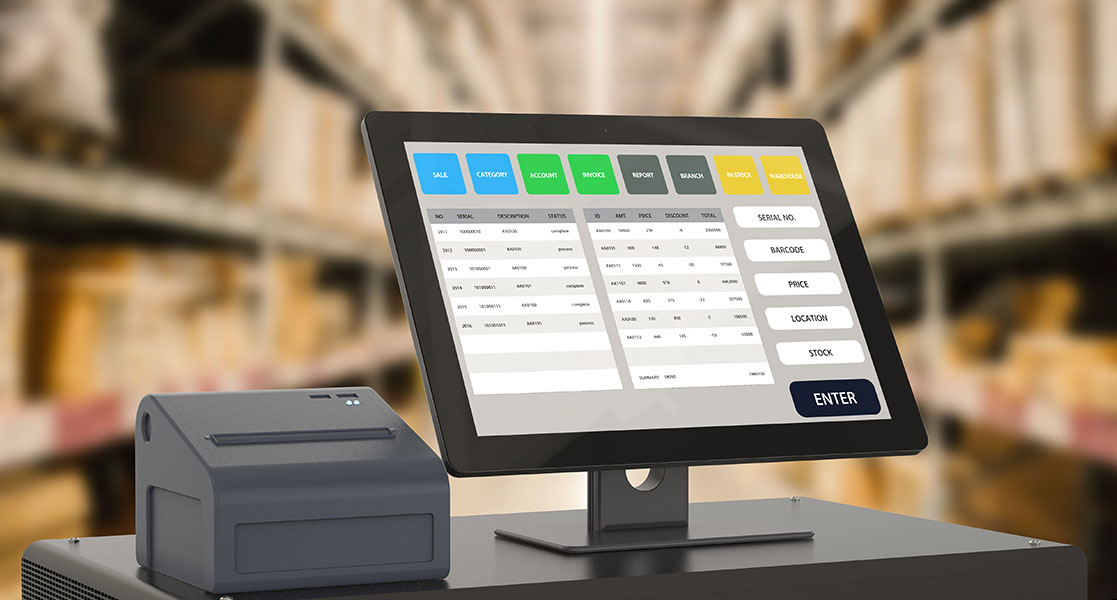
Switching to a POS system isn’t just about looking modern; it is about gaining a “digital partner” for your business. A POS system automates the recording process. The moment an item is scanned or selected, the sale is logged, the inventory is adjusted, and the profit is calculated instantly.
One of the greatest benefits of a digital system is real-time visibility. Unlike a notebook that stays in the shop, modern POS software allows you to track your daily sales from your smartphone while you are at home or at the wholesaler. This transparency is what allows a business owner to step back from the counter and focus on growth rather than just supervision.
Furthermore, a POS system professionalizes your customer experience. Providing a printed or digital receipt via SMS builds trust. In a market where customers are becoming more discerning, showing that your prices are fixed and your billing is transparent sets you apart from the competition.
Data-Driven Growth vs. Guesswork
The most powerful advantage of POS software is the data it provides. Manual tracking tells you what you sold today, but a POS tells you why your business is growing.
With digital reports, you can see which products are your “cash cows” and which ones are just taking up space. You can identify your busiest hours and staff appropriately. This level of insight is essential for scaling. According to the World Bank’s recent reports on SME digitalization, businesses that adopt digital tools for record-keeping are significantly more likely to qualify for formal credit. Banks in Ghana want to see organized, verifiable sales data before approving a business loan; a handwritten notebook rarely satisfies a credit officer.
Digital systems also simplify tax compliance. With the government’s push for digital VAT monitoring and Fiscal Electronic Devices (FEDs) in the 2026 budget, having a system that automatically generates clean reports of your revenue and expenses saves you from the stress of tax season.
Why Flow POS is Built for the Ghanaian Reality
While many international software options exist, they often fail to account for the unique challenges of the Ghanaian market—such as unstable internet or the heavy use of Mobile Money. This is where Flow POS excels.
Flow POS was designed specifically to bridge the gap for Ghanaian retailers. It offers robust sales tracking that works even when the network is down, syncing your data once you’re back online. It also understands the local payment landscape, making it easy to record MoMo transactions alongside cash sales so your accounts always balance.
By using a system like Flow POS, you are moving away from the “guesswork” of a notebook and toward a professional inventory management strategy that ensures you never run out of your most profitable items. It is a solution built for the shop owner who wants to grow from one branch to three.
Conclusion:
The choice between manual sales tracking and POS software is ultimately a choice about the future of your business. Manual tracking is a survival tool—it keeps you going today, but it doesn’t help you build for tomorrow. POS software is a growth tool—it provides the structure, security, and data needed to expand.
For the Ghanaian retailer who is tired of the “evening headache” of balancing books and wants to see their business thrive, the transition to a digital system is the most important investment you can make this year. It replaces stress with clarity and turns your shop into a modern, professional enterprise.