

Managing inventory is one of the most difficult tasks for retail shop owners in Ghana. Whether you run a provision shop, boutique, pharmacy, or supermarket, knowing what is in stock, what is selling fast, and what needs restocking can make or break your business. Yet many retailers still rely on memory, visual checks, or handwritten notes to manage inventory.
While this approach may work at a very small scale, it often leads to losses, missed sales, and unnecessary stress as the business grows. Proper inventory management is not just about counting items on shelves; it is about having control, accuracy, and visibility over your stock at all times.
In this article, we’ll explain how to manage inventory effectively in a retail shop in Ghana, the common mistakes to avoid, and how modern tools can simplify the process.
Why Inventory Management Is a Big Challenge for Retail Shops in Ghana
Many retail shops in Ghana operate in fast-moving environments where products are sold daily and restocked frequently. Without a structured system, it becomes difficult to track how many items were sold, how many remain, and when new stock should be ordered.
Shop owners often discover inventory problems only when customers ask for items that are out of stock or when expired products are found on shelves. In other cases, money is tied up in slow-moving products while fast-selling items are unavailable.
Poor inventory management leads to lost sales, wasted stock, and cash flow problems. Over time, these issues reduce profitability and limit business growth.
Common Inventory Mistakes Retail Shops Make
One common mistake is relying on manual stock counting. Counting items by hand is time-consuming and prone to errors, especially in busy shops. Another issue is failing to record inventory updates immediately after sales, which leads to inaccurate stock records.
Some shop owners also restock based on assumptions rather than data. This often results in overstocking items that do not sell well while running out of popular products. Without clear records, it becomes difficult to understand which products are profitable and which are not.
These mistakes are common, but they are also avoidable with the right approach and tools.
Steps to Managing Inventory Properly in a Retail Shop
Effective inventory management starts with knowing exactly what products you sell. Every item in your shop should be clearly identified, priced, and recorded. This includes tracking product names, quantities, and selling prices.
Next, inventory updates must be consistent. Whenever a product is sold, returned, or restocked, records should be updated immediately. Delayed updates are one of the main reasons inventory records become inaccurate.
Finally, shop owners should regularly review inventory data to identify trends. Understanding which products sell fast, which sell slowly, and which rarely sell helps improve restocking decisions and reduce waste.
How POS Software Simplifies Inventory Management
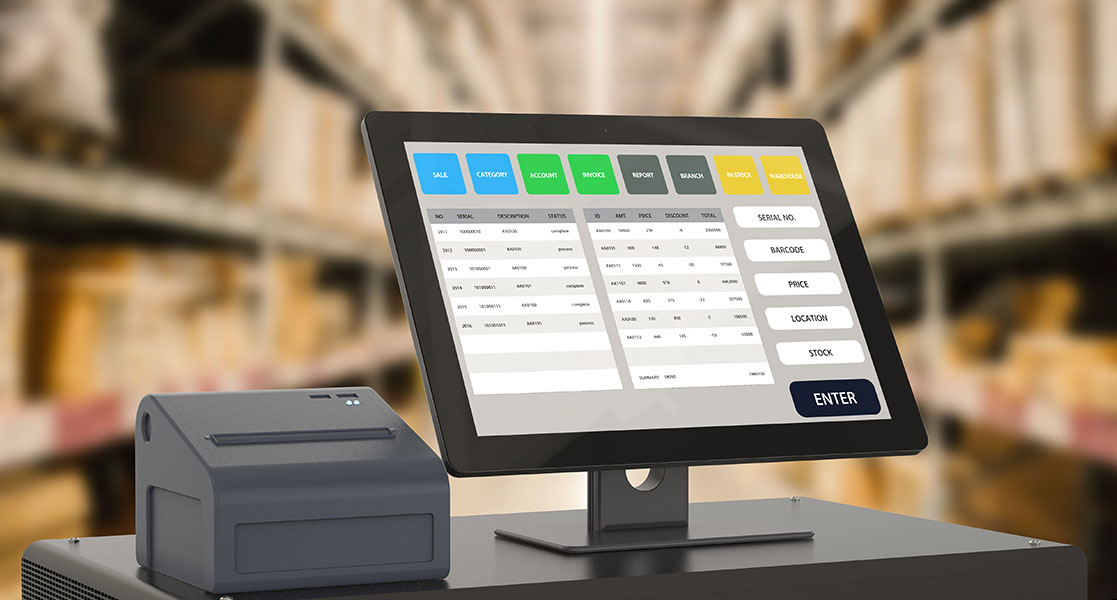
Using POS software is one of the most effective ways to manage inventory in a retail shop. A POS system automatically updates stock levels whenever a sale is made, removing the need for manual counting after every transaction.
With POS software, shop owners can easily see how much stock is available, receive alerts when items are running low, and avoid unexpected stock shortages. This is especially helpful for fast-moving consumer goods common in Ghanaian retail shops.
Modern systems like Flow POS allow retailers to manage inventory from one dashboard, giving them real-time visibility and better control.
👉 Internal link: Inventory Management with Flow POS
Preventing Stock Losses and Expired Products
Stock losses and expired products are major causes of hidden losses in retail shops. Without proper tracking, items may expire on shelves or go missing without notice.
Inventory management tools help shop owners monitor product movement and identify slow-moving items early. This allows for timely discounts, promotions, or restocking adjustments to reduce waste.
Better visibility also improves accountability, making it easier to detect discrepancies and prevent losses.
Managing Inventory Across Multiple Products and Categories
As a retail shop grows, the number of products and categories increases. Managing inventory manually becomes more complex and error-prone.
Organizing products into categories helps shop owners understand performance better and manage stock more efficiently. POS systems support product categorization, making it easier to track sales and inventory by category.
This level of organization saves time and supports smarter decision-making.
How Good Inventory Management Improves Cash Flow
Inventory ties up money. When too much cash is locked in unsold stock, it becomes difficult to pay suppliers or invest in business growth.
Good inventory management ensures that money is spent on products that sell and generate profit. By reducing overstocking and minimizing losses, shop owners can maintain healthier cash flow and operate more confidently.
Conclusion:
Managing inventory properly is essential for running a successful retail shop in Ghana. Without accurate records and clear visibility, businesses face unnecessary losses, missed sales, and constant stress.
By adopting better inventory practices and using modern tools like POS software, shop owners can gain control, reduce waste, and make smarter business decisions. Inventory management is not just an operational task; it is a foundation for sustainable growth.
As competition increases, retail shops that manage inventory effectively are better positioned to succeed and expand.
👉 Internal link: Explore Flow POS for Smarter Inventory Management